Spray dryers have their core value in the pharmaceutical industry in that they can convert solutions, suspensions, or emulsions into controllable-size powders in one step via atomization and instant drying, thereby simultaneously addressing three hard formulation challenges: improving dissolution of poorly soluble drugs, preserving heat-sensitive active ingredients during powder formation at low temperatures, and precisely tuning powder particle size and crystal form. As a result, spray dryers have evolved from early equipment for drying Chinese herbal extracts into a critical process unit for innovative drug solid dispersions, inhalation products, and sterile biologics.

I. Improving the bioavailability of poorly soluble drugs: amorphous solid dispersions (ASDs)
This is currently the most mainstream application of spray dryers in pharmaceutical development. Many drug candidates fall into BCS Class II/IV, where solubility is the rate-limiting factor. Spray drying disperses the API at the molecular level in a polymer carrier (such as HPMCAS, PVP, PVP-VA, Soluplus, or Eudragit), keeping it in an amorphous state and thereby significantly increasing supersaturated solubility and the dissolution rate.
Compared with hot-melt extrusion (HME), another mainstream process, spray drying is better suited for heat-sensitive drugs, is less restrictive regarding drug loading and polymer-drug compatibility, and can handle high-melting or highly viscous systems. Its drawbacks include the need to use organic solvents, residual solvent issues, and the requirement for solvent recovery and explosion protection. Comparative studies in the literature (e.g., felodipine/HPMCAS systems) focus on the differences between the two in amorphous stability and dissolution behavior; the physical stability (recrystallization, moisture uptake) of spray-dried products and their subsequent tablet disintegration performance remain key topics in formulation and process development.

II. Inhalation products and pulmonary drug delivery
Dry powder for inhalation (DPI) requires aerodynamic particle sizes in the 1–5 μm range for effective lung deposition. Spray drying can directly produce, "in one step," spherical microparticles with controlled density and surface properties by adjusting the atomization method, solid content, and drying conditions. It can also be used to prepare carrier-free DPI or modified carrier particles, avoiding the problems of uneven particle size and static charges associated with traditional micronization.

III. Active pharmaceutical ingredient (API) manufacturing and continuous manufacturing
Spray dryers can directly yield powders from reaction solutions or crystallization mother liquors, replacing multi-step unit operations such as "filtration + drying," shortening the process, improving yield, and serving as an important component of continuous manufacturing. They can also be used to control the polymorphism/amorphous form of APIs, prepare dried nanosuspension powders, and improve the dissolution rate of APIs.

IV. Sterile products and biologics
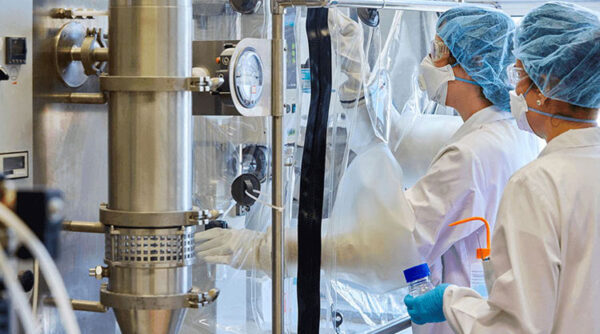
Sterile spray drying (including low-temperature spray drying and spray freeze drying, SFD) is used for drying sterile powders for injection, peptides, proteins, vaccines, and adjuvants. It can remove moisture at relatively low temperatures while preserving biological activity, and is also used to prepare protein sustained-release microspheres and dried liposome powders.

V. Traditional Chinese medicine and natural extracts
Most Chinese herbal extracts are highly hygroscopic, sticky, and poorly flowable. During spray drying, drying aids such as dextrin and lactose can be added to convert the extract into a dry extract powder with good flowability and low hygroscopicity, facilitating granulation and tablet compression—this is the most traditional application branch in the domestic pharmaceutical industry.

VI. Key process and quality considerations
Equipment configurations include open/closed-loop systems (organic solvents require a closed loop with nitrogen inert protection and solvent recovery) and sterile models. The core control parameters include inlet and outlet air temperature, atomization method (pressure, centrifugal, or two-fluid air-blast), feed rate, and atomizing gas flow, which together determine particle size distribution, residual solvent, and amorphous stability. Scale-up must ensure geometric similarity in atomization and heat transfer.
In terms of regulation, spray drying processes must comply with GMP requirements and establish a design space and process analytical technology (PAT) under the QbD philosophy (ICH Q8). Residual solvents are controlled in accordance with ICH Q3C (acetone and dichloromethane, for example, are key items), while solid-state form and particle size are characterized using XRD, DSC/mDSC, solid-state NMR, and laser diffraction.
VII. Main challenges
These include the explosion-protection, recovery, and residual-solvent costs associated with organic solvents; the risk to physical stability and shelf life of amorphous products; yield losses from material adhering to the chamber walls; degradation of heat-sensitive components during drying; and scale-up consistency from laboratory to industrial scale. These are exactly the aspects that require focused process design and validation.
Overall, spray dryers have evolved from mere "drying equipment" into a formulation process platform integrating drying, shaping, solubilization, and encapsulation. Especially for high-value poorly soluble innovative drugs, inhalation products, and biologics, they complement—rather than replace—technologies such as hot-melt extrusion and micronization.
The above is a general overview of industry applications. The choice between spray drying and hot-melt extrusion for a specific compound, and the setting of process parameters, depend on the API's thermal stability, drug loading targets, and dosage form requirements, and require experimental design tailored to the specific project. If you have a particular drug or dosage form in mind, I can elaborate further.
